


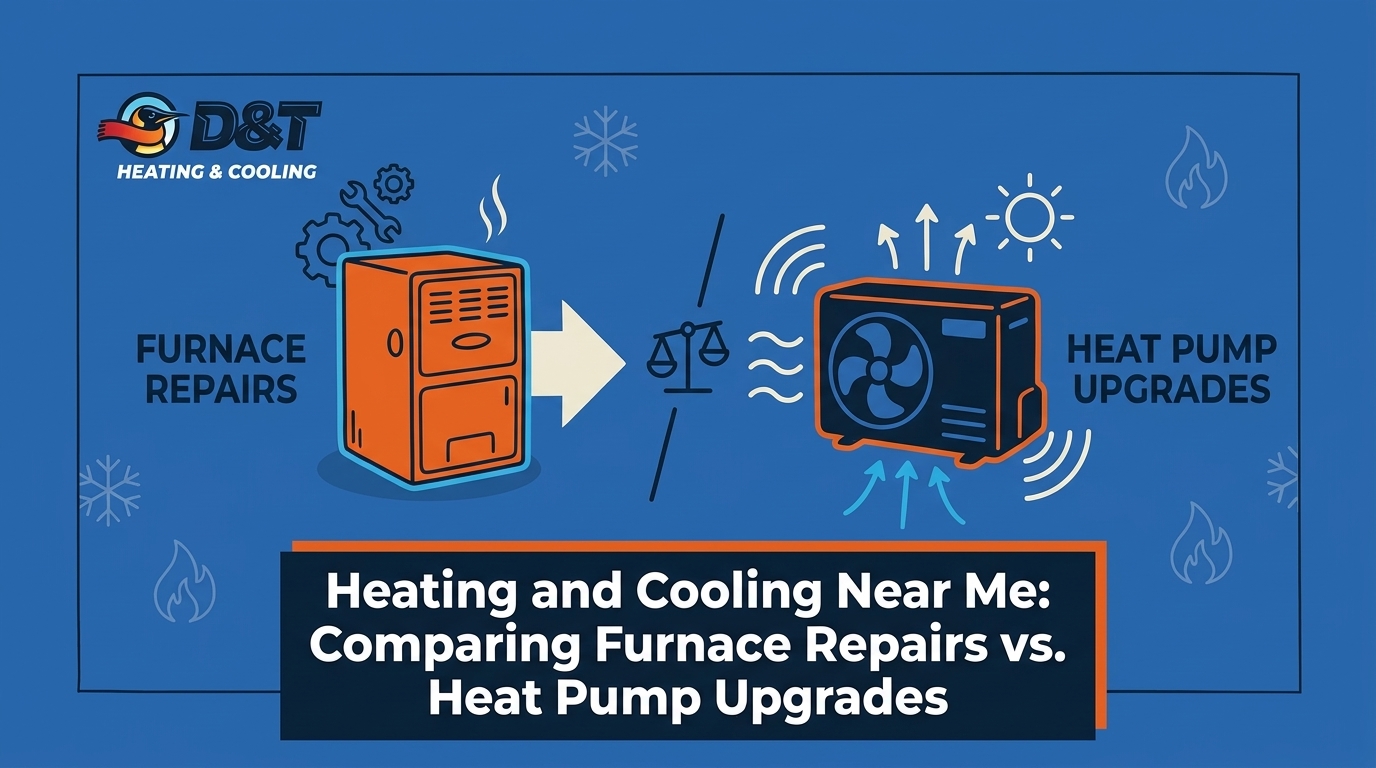
Navigating the October Pre-Winter Inspection Decision
The telltale signs of a struggling heating system often appear just when you need reliable warmth the most, leaving you searching for accurate options comparisons for homeowners. As the pre-winter heating startup in October approaches, you face a critical decision: should you patch up an aging gas furnace for one more season, or is it time to invest in a modern, energy-efficient replacement? Making this choice before the first freezing temperatures arrive gives you the upper hand, allowing you to evaluate your options without the pressure of an emergency breakdown.
During a standard fall maintenance visit, technicians frequently uncover hidden wear and tear inside older units. This discovery forces a common dilemma. Paying for a quick fix might seem appealing right now, but it rarely solves the underlying efficiency problems of an outdated system. Instead, taking an objective look at long-term home comfort and reliability helps you make a sound investment. By understanding the mechanical differences, operational costs, and lifespan expectations of both gas furnaces and modern heat pumps, you can choose the path that keeps your home consistently comfortable all winter long.
Assessing the True Cost of Repairing an Aging Gas Furnace
A well-maintained gas furnace typically boasts a lifespan of 15 to 20 years. However, as these systems enter their final years of operation, their efficiency drops and the frequency of component failures increases. Paying for repeated repairs on an aging, inefficient unit quickly leads to diminishing returns. An objective evaluation during your pre-winter heating startup in October is the best way to determine if your current furnace is still viable or if it has become a financial liability.
During a recent fall season, one local homeowner realized their aging setup was simply beyond a simple patch. They made the decision to replace their old furnace, air conditioning unit, and some deteriorating ductwork all at once. The removal of the old equipment and the installation of the new system were completed professionally, with every step of the new system’s operation explained thoroughly. Upgrading old ductwork alongside a new unit drastically improves overall airflow, ensuring the new equipment operates at peak performance.
Identifying Signs of Imminent Furnace Failure
- Frequent cycling and uneven heating: If your furnace turns on and off constantly but certain rooms remain cold, the blower motor or heat exchanger may be failing.
- Unusual operational noises: Grinding, squealing, or loud banging sounds indicate significant mechanical wear that requires immediate attention.
- Rising utility bills: When energy costs climb despite regular maintenance and consistent thermostat settings, your furnace is working much harder to produce the same amount of heat.
When Repair Costs Outweigh Replacement Benefits
Industry professionals often rely on the 50% rule to guide homeowners. If the cost of a necessary repair approaches or exceeds half the price of a brand-new system, replacement is generally the smarter financial move. Factoring in future breakdowns is also critical. A major repair today does not guarantee that another expensive component will not fail next month. Furthermore, you must consider the lost efficiency; an older furnace might only convert 70% of its fuel into usable heat, whereas a modern replacement utilizes nearly all of it.
Demystifying Cold-Climate Heat Pumps in Sub-Freezing Weather
One of the most persistent myths in the HVAC industry is that heat pumps cannot handle freezing, snowy winters. While this may have been true decades ago, modern engineering has completely changed the landscape. Bear, DE experiences freezing, snowy winters, making dual-fuel configurations or cold-climate heat pumps essential for uninterrupted comfort. Today’s heat pumps are designed to extract ambient heat from the outside air even when temperatures plunge well below freezing, providing a highly efficient alternative to traditional combustion furnaces.
Because a heat pump moves heat rather than generating it by burning fossil fuels, it offers incredible year-round benefits. In the summer, the system reverses its operation to act as a high-efficiency air conditioner. Consolidating your heating and cooling into a single, advanced system simplifies your home’s infrastructure and drastically reduces your overall carbon footprint.
Advancements in Sub-Freezing Heat Pump Technology
Variable-speed compressors are the driving force behind modern cold-climate heat pumps. Unlike older single-stage units that blast air at full capacity and then shut off, variable-speed technology allows the system to adjust its output in tiny increments. This continuous, low-power operation maintains a steady indoor temperature and prevents massive energy spikes. Combined with enhanced refrigerants that have lower boiling points, these systems maintain high efficiency ratings even when the outdoor thermometer drops significantly.
Dual-Fuel Systems for Extreme Cold
For homeowners who want absolute peace of mind during severe blizzards, a dual-fuel system offers the ultimate hybrid solution. How it works: A dual-fuel setup pairs a high-efficiency electric heat pump with a gas furnace backup. During mild winter days, the heat pump handles all the heating duties efficiently. If temperatures drop to extreme, sub-freezing levels where the heat pump’s efficiency begins to wane, the system automatically switches to the gas furnace. This maximizes energy efficiency while ensuring absolute reliability during the harshest weather.
Head-to-Head: Long-Term Reliability and Energy Efficiency
When deciding between a new gas furnace and a heat pump, establishing a clear, objective comparison framework is crucial. Both systems offer excellent long-term reliability when properly maintained, but they achieve home comfort in entirely different ways. Transitioning away from strictly fossil-fuel-dependent systems offers significant environmental benefits, but traditional furnaces still provide robust, high-heat output that some homeowners prefer.
Understanding AFUE vs. HSPF Ratings
Gas furnaces are measured by their Annual Fuel Utilization Efficiency (AFUE) rating. This percentage represents how much of the fuel consumed is actually converted into usable heat for your home. Modern high-efficiency furnaces can achieve AFUE ratings in the upper 90s, meaning very little energy is wasted as exhaust. Heat pumps, on the other hand, are measured by the Heating Seasonal Performance Factor (HSPF) for heating and the Seasonal Energy Efficiency Ratio (SEER) for cooling. Because heat pumps transfer heat rather than generating it, they can technically operate at over 100% efficiency, delivering more heat energy than the electrical energy they consume.
Comparing Maintenance Requirements Over Time
Furnace maintenance requires specific safety checks on the heat exchanger, burners, and gas lines to prevent carbon monoxide leaks and ensure clean combustion. This is typically an annual requirement. Heat pump maintenance requires a bi-annual schedule. Because the unit operates year-round—handling both your summer cooling and your winter heating—it accumulates wear and tear faster and needs to be inspected in both the spring and the fall to maintain optimal performance.
| Feature | Gas Furnace | Heat Pump |
|---|---|---|
| Average Lifespan | 15 to 20 years | 15 years |
| Efficiency Metric | AFUE (Percentage) | HSPF (Heating) / SEER (Cooling) |
| Maintenance Frequency | Annually (Fall) | Bi-annually (Spring and Fall) |
| Climate Suitability | Excellent for extreme cold | Excellent year-round; dual-fuel options available for extreme cold |

Maximizing Value with Generic Energy Rebates and Tax Incentives
Upgrading your heating system is a significant investment, but modern efficiency standards mean you rarely have to shoulder the entire burden alone. Government agencies and local utility providers actively encourage homeowners to transition to high-efficiency equipment to reduce strain on the power grid and lower overall carbon emissions. Taking advantage of these generic incentives can substantially offset the initial investment of a modern system.
- Federal Tax Credits: Upgrading to ENERGY STAR certified heat pumps or high-efficiency gas furnaces often qualifies you for federal tax credits. These credits are designed to reward homeowners who make energy-conscious home improvements.
- Utility Rebate Programs: Local utility companies frequently offer their own rebate programs for the installation of high-efficiency HVAC equipment. These programs vary by region and season.
- Manufacturer Incentives: Equipment manufacturers occasionally run seasonal promotions that can be combined with local and federal incentives.
Because program requirements, efficiency thresholds, and available funds change frequently, it is highly advised to consult with a tax professional or your local utility provider to verify current programs and eligibility before making your final purchase during your pre-winter heating startup in October.
The Importance of Prompt Local Expertise for System Selection
Even the most advanced, high-efficiency heating system will fail to deliver comfort if it is installed incorrectly. Proper system sizing is critical. A technician must perform a detailed Manual J calculation to measure your home’s square footage, insulation levels, window quality, and sun exposure. An oversized unit will short-cycle, turning on and off too quickly, which leads to excessive wear and poor humidity control. An undersized unit will run continuously, driving up your energy bills without ever reaching your desired temperature.
Prompt, trusted local expertise ensures that Delaware homeowners receive correctly sized systems tailored to local weather extremes. Having a local contractor who can respond quickly and complete installations efficiently—even during the busy fall season—makes a massive difference in your experience. One local homeowner recently needed to replace an old HVAC unit and required a fast turnaround. A brand-new unit was installed within just four hours, with the technicians taking the time to explain all the changes, upgrades, and operational details of the new system.
The Dangers of Improper System Sizing
Generic online calculators simply cannot replace a professional, in-home assessment. Short-cycling from an oversized unit not only destroys the compressor prematurely but also creates uncomfortable temperature swings from room to room. Relying on local experts who understand the nuances of the regional climate guarantees that your equipment matches your home’s exact thermal load.
Trusting Certified Technicians for Complex Upgrades
Modern HVAC installations involve complex electrical wiring, high-pressure refrigerants, and strict local building codes. Trusting certified technicians provides the peace of mind that comes from transparent, professional service. They ensure all safety regulations are met, which directly connects the quality of the installation to the longevity and performance of your new equipment. To learn more about the broader impact of professional service, you can read about how HVAC companies improve home comfort.
Expert Answers to Your Heating System Replacement Questions
What are the best heating replacement options for an aging gas furnace?
The best replacement options are either a modern, high-efficiency gas furnace or a cold-climate heat pump. A high-efficiency gas furnace provides powerful, rapid heat using the same fuel source you already have. A heat pump offers the added benefit of year-round heating and cooling, often with significantly lower operational energy requirements.
Is a heat pump better than a gas furnace for long-term savings?
In many cases, a heat pump yields better long-term energy savings because it moves heat rather than creating it from combustion. However, the exact savings depend on your local electricity rates compared to natural gas prices. A properly sized heat pump will consistently lower your carbon footprint and reduce your reliance on fossil fuels.
How do modern heat pumps perform in freezing winter weather?
Modern heat pumps perform exceptionally well in freezing weather thanks to advancements in variable-speed compressors and specialized refrigerants. They can extract ambient heat from the air even when temperatures dip below freezing. For regions with extreme, prolonged blizzards, they are often paired with a gas furnace in a dual-fuel setup.
At what temperature does a standard heat pump become inefficient?
Older standard heat pumps typically begin to lose efficiency when outdoor temperatures drop below 40 degrees Fahrenheit. However, modern cold-climate heat pumps are engineered to maintain high efficiency ratings even when temperatures fall into the teens or single digits. If you live in a particularly harsh climate, a dual-fuel system ensures you never lose efficiency.
Should I replace my air conditioner at the same time as my furnace?
Yes, replacing your air conditioner at the same time as your furnace is highly recommended. Because the two systems share the same indoor blower motor and ductwork, matching new components ensures maximum energy efficiency and balanced airflow. It also saves you money on future installation labor costs.
What is a dual-fuel heating system and do I need one?
A dual-fuel heating system combines an electric heat pump with a gas furnace backup. The system uses the highly efficient heat pump during mild winter weather and automatically switches to the gas furnace during extreme freezing conditions. If you live in Bear, DE, a dual-fuel system offers the perfect balance of energy savings and reliable, high-capacity heat.
Making Your Final Heating Decision Before Winter Arrives
The core choice comes down to pushing an old, unreliable furnace through another demanding year or investing in a reliable, highly efficient modern system. Making this decision during your pre-winter heating startup in October ensures you have the time to carefully weigh the benefits of a robust gas furnace against the year-round efficiency of a heat pump. Taking action now prevents the stress of emergency breakdowns in the dead of winter.
You deserve a clear, comparative framework that helps you weigh reliability and energy efficiency without feeling pressured. Schedule a professional evaluation today to get an objective assessment of your current equipment and discover which heating replacement option will keep your home comfortable for years to come.