


How to Flush Your Water Heater for Longevity: A Practical, No-Nonsense Guide
Flushing your water heater is one of the simplest steps you can take to keep it running longer and use less energy. Left alone, sediment and minerals collect in the tank, making the heater work harder and shortening its life. This guide explains why flushing matters, how often to do it, and the safe, step-by-step way to flush most systems. We’ll also cover the differences between tank and tankless units and share a few extra maintenance tips. By the end, you’ll know when to DIY and when it’s time to call DT Heating & Cooling in Bear, DE.
Why Flushing Your Water Heater Matters
Regular flushing removes sediment that settles in the bottom of the tank. That buildup can act like insulation around the heating element, forcing the unit to run longer and use more electricity or gas. Flushing keeps your heater efficient and reduces strain on its components.
How Sediment Reduces Efficiency and Shortens Lifespan
Sediment separates water from the heater’s element or burner, which causes overheating and wasted energy. Over time that extra stress leads to parts wearing out sooner and can cut your heater’s overall lifespan. Removing the sediment prevents those problems and helps avoid early replacement or expensive repairs.
Research and industry guidance consistently show that water quality, scale and sediment negatively affect heater performance and service life.
Water Quality, Scale, and Sediment: Effects on Residential Water Heaters
Studies and technical reviews note that scale and sediment increase wear, reduce thermal transfer, and raise long‑term operating costs for residential water heaters. Managing water quality and routine maintenance helps protect performance and lower lifetime costs.
Key Benefits of Regular Water Heater Flushing
- Better efficiency: Removing sediment reduces how long the heater runs, lowering energy use.
- Longer equipment life: Less buildup means less wear and fewer premature component failures.
- Cleaner water: Flushing helps remove particles that can discolor water or affect taste.
How Often Should You Flush Your Water Heater?
Frequency depends on your water and household use. As a rule of thumb, plan at least one flush per year — more often if your water is hard or you use a lot of hot water.
Recommended Flushing Intervals by Condition
- Hard water: Flush about every six months to control mineral buildup.
- Soft water: An annual flush is usually enough.
- High usage households: If your family uses a lot of hot water, consider flushing more frequently.
Signs Your Water Heater Needs Flushing
- Unusual noises: Popping or rumbling often points to trapped sediment.
- Discolored water: Brownish or rusty water can mean tank corrosion or sediment.
- Less hot water: If supply drops suddenly, sediment may be reducing available volume.
Step-by-Step: How to Flush Your Water Heater Safely
Flushing a tank-style water heater is straightforward if you follow safety steps. Below is a clear DIY process, but stop and call a pro if you’re unsure at any point.
DIY Flushing Steps for Traditional Tank Water Heaters
- Turn off power or gas: For electric units, switch off the breaker. For gas units, set the control to “pilot” or shut off the gas supply.
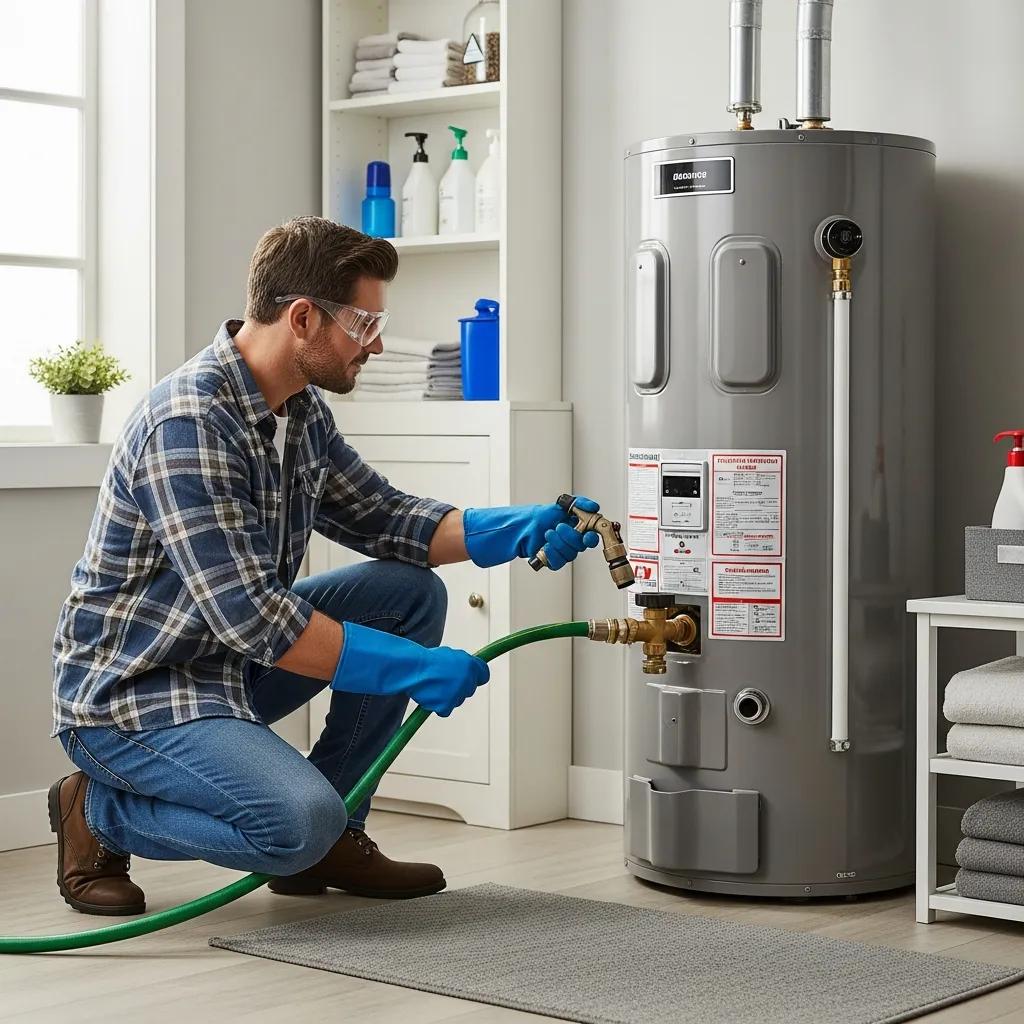
- Attach a hose: Connect a garden hose to the tank drain valve and run it to a safe drain location.
- Open the drain valve: Carefully open it and let the tank empty into the drain or a bucket.
- Rinse the tank: With the drain open, briefly open the cold water inlet to stir up and flush remaining sediment, then drain again.
- Close and refill: Close the drain valve, remove the hose, and turn the cold water supply back on to refill the tank.
- Restore power or gas: Once the tank is full, restore electrical power or relight the pilot and set the temperature.
When to Hire a Professional for Flushing
DIY works for many households, but call a technician when:
- There’s heavy sediment: Thick deposits may need professional tools to remove safely.
- Your system is complex: Tankless or integrated systems often require special procedures or descaling solutions.
- You’re not comfortable: If working near gas lines, electricity, or cramped spaces makes you uneasy, a pro is the safer choice.
Tankless vs. Traditional: How Flushing Differs
Tankless and tank-style heaters need different care. Tank systems need sediment removal, while tankless units need descaling to prevent mineral buildup inside heat exchangers.
Tankless Water Heater Maintenance Needs
Tankless units are prone to scale in hard-water areas. We recommend descaling them every 6–12 months depending on water hardness. Descaling typically involves circulating a vinegar or commercial descaling solution and is often best done by a trained technician. For more information about our water heaters, please contact us.
Keeping Traditional Storage Tanks in Good Shape
Storage tanks should be flushed at least once a year. Also check the anode rod regularly — it protects the tank from corrosion. Replace the anode rod every 3–5 years, or sooner if it’s heavily corroded.
Extra Maintenance Tips That Help Your Water Heater Last Longer
Beyond flushing, a few routine checks keep your heater running smoothly and safely.
Anode Rod Inspection and Replacement
The anode rod attracts corrosive elements and helps protect the tank. Inspect it every 1–3 years and replace it when it’s more than half worn — doing so can add years to the unit’s life.
Temperature Settings and Insulation
Set your water heater to about 120°F to reduce scald risk and lower energy use. Insulating the tank and nearby hot-water pipes reduces heat loss and improves overall efficiency.
How DT Heating & Cooling Can Help in Bear, DE
DT Heating & Cooling provides professional flushing and maintenance for both tank and tankless systems. Our team handles thorough cleaning, inspections, and repairs so your heater works safely and efficiently.
Why Choose Local Experts for Water Heater Care?
- We know local water: Our technicians understand how area water conditions affect equipment and tailor service accordingly.
- Fast response: Being local means quicker appointments and faster problem resolution.
- Personal service: We treat each home like it’s our own and explain recommendations in plain language.
Schedule a Flush or Get a Quote
Booking service is easy — contact us online or call our office. We’ll walk you through the options and give a clear estimate for the work you need. All of DT Heating provides exceptional heating and cooling services.
Frequently Asked Questions
What tools do I need to flush my water heater?
For most tank units you’ll need a garden hose, a bucket or floor drain, and possibly a wrench to open a stuck drain valve. You’ll also need to cut power at the breaker for electric units or turn the gas control to pilot for gas units. That’s usually all it takes for a basic flush.
Can flushing my water heater prevent future repairs?
Yes. Regular flushing removes sediment that causes overheating and extra wear. Routine maintenance helps prevent many common failures and can delay or avoid costly repairs and early replacement.
Is it safe to flush a water heater on my own?
Yes, if you follow safety steps: shut off power or gas, use a hose to a safe drain, and take care when handling hot water. If you’re unsure about gas lines, wiring, or heavy sediment, call a professional.
What should I do if my water heater is still noisy after flushing?
If noise continues, it may mean hardened deposits, a failing heating element, or other mechanical issues. Contact a technician to diagnose and fix the root cause rather than relying on repeated flushing alone.
How can I improve the efficiency of my water heater besides flushing?
Replace a worn anode rod, set the thermostat to about 120°F, and insulate the tank and hot water pipes. Regular inspections and prompt repairs also keep the system operating efficiently.
What are the signs that my water heater needs professional maintenance?
Look for persistent leaks, odd noises, rusty or discolored water, or a steady drop in hot water supply. If your heater is older and hasn’t been maintained, schedule a professional check before problems escalate.
How does water quality affect the frequency of flushing my water heater?
Water with high mineral content (hard water) speeds up scale and sediment buildup, so flush every six months in those areas. With softer water, an annual flush is usually enough. Monitor performance and adjust the schedule if you notice issues.
Conclusion
Flushing your water heater is a low-effort way to boost efficiency, avoid trouble, and extend the life of your equipment. Combine regular flushing with anode inspections, proper temperature settings, and insulation to protect your investment. If you’d rather leave it to pros, DT Heating & Cooling in Bear, DE can handle the job quickly and correctly — schedule a service today to keep your hot water reliable for years.